
How to migrate from a complex and dated WordPress architecture to the simplicity of a modern, secure and simple static HTML site
A WordPress site ages badly. Every month brings its batch of updates to install, a theme that breaks a page and an abandoned plugin that becomes an open door to widely exploited security flaws. Behind the dashboard sits a full technical stack: a web server, PHP, a database and WordPress itself, each layer having to stay up to date, compatible and closed to known vulnerabilities. This use case shows how to remove those maintenance difficulties and move to a more modern, simpler and widely adaptable solution: static HTML pages, rewritten from your existing content and edited by you.
The tool doing that work is OpenCode, an open-source coding agent edited by Anomaly. What makes it powerful is that it reads a complete WordPress export (posts, pages, products, menus, images) and turns it into clean HTML, CSS and JavaScript files, with no database and no PHP.
A concrete case: lespetitsbricolos.com
The Les Petits Bricolos woodworking workshop for children, in Geneva, went through exactly this. Its site ran on WordPress: an OceanWP theme, Elementor, form plugins, a wp-content/uploads folder full of photos and a full stack to maintain for a page that only changes once per season. The new version keeps the same content and the same photos, but in a static HTML page served by a single CSS file.
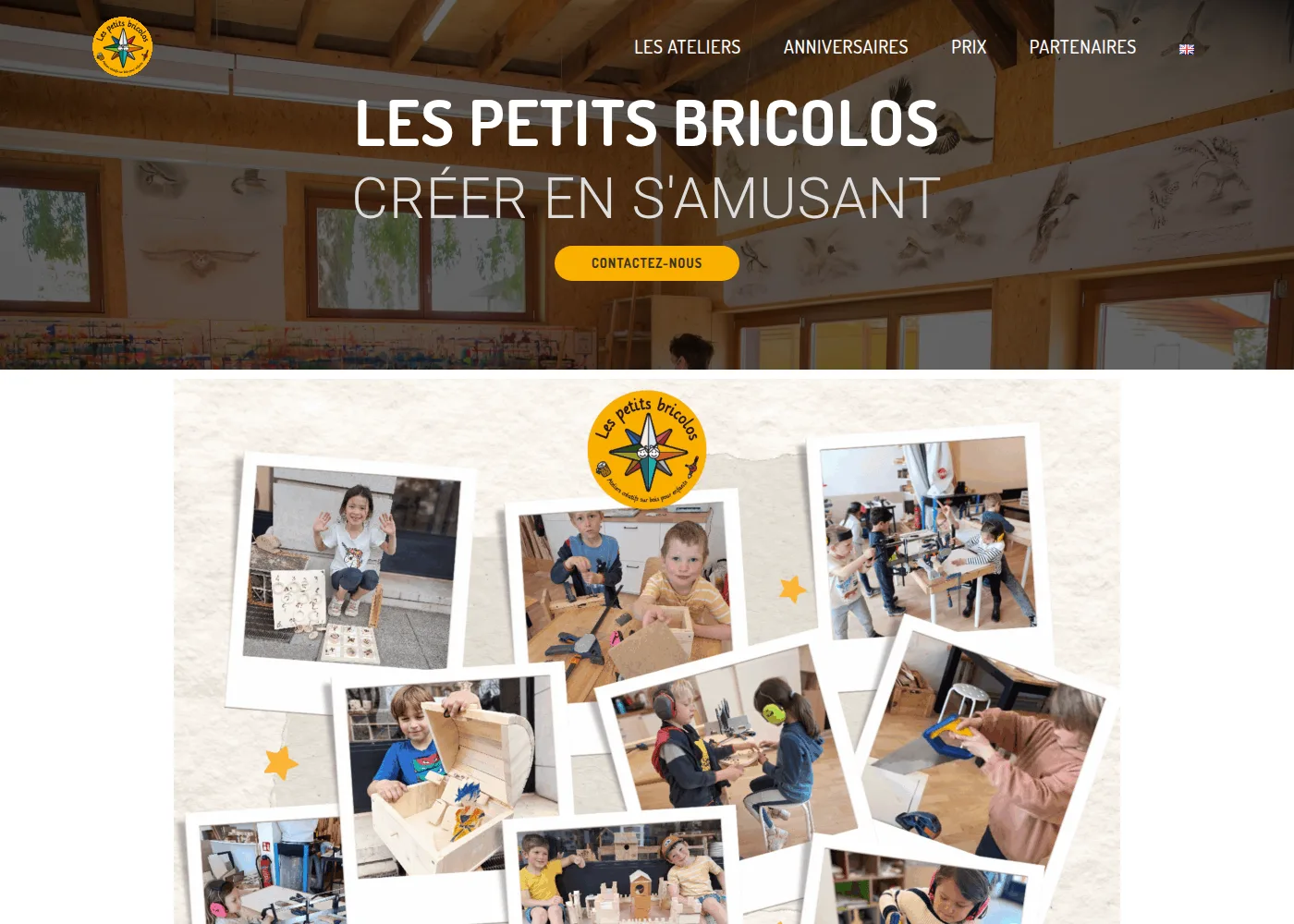
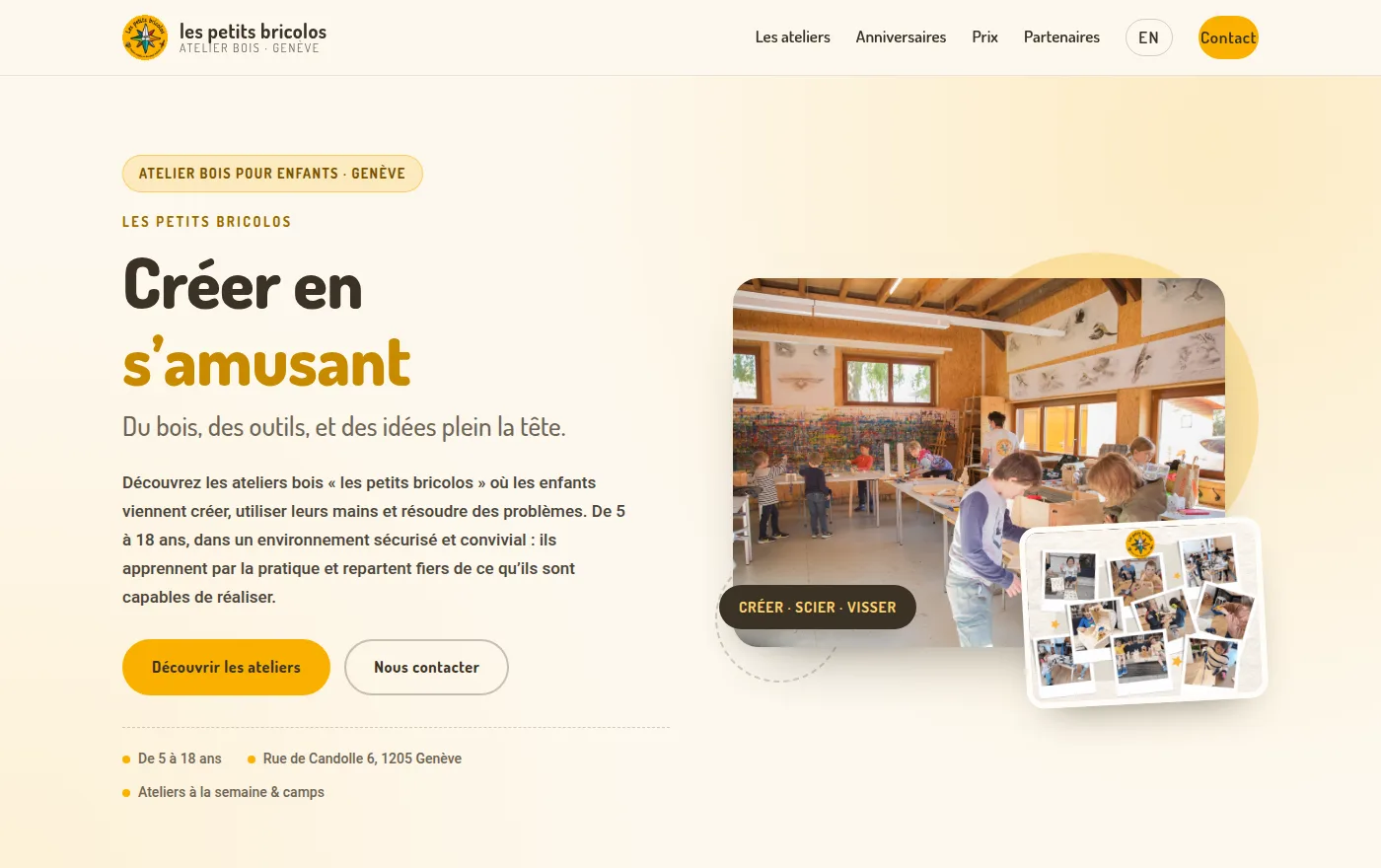
What changes in practice:
- The text is readable again: ordered headings, proper contrast and consistent sizes on mobile and on large screens
- Practical details (remaining places, camp prices, slot times) sit in clear cards
- The opening photo and the photo collage are kept but recropped and compressed
- The FR/EN switcher stays at the top, with two versions whose structure is strictly identical
- No more page builder: clean HTML, a few hundred lines of CSS and almost no JavaScript
The mockup was produced by the AI from the existing content, then reviewed and adjusted by the local expert before being proposed. Nothing is published before the client validates it. After that, one sentence is enough to evolve the page: "make the workshop photo full width" or "the winter camp is now 600 CHF, apply the change in both languages".
The real problem with WordPress
The problem is not WordPress itself. It is the cost of ownership of a dynamic stack for a site that, in most cases, does not change from one week to the next.
- The updates. The core, the theme, every plugin and sometimes PHP itself require a monthly update. Each one can break a form, a product page or a payment. Postponing them means leaving publicly documented vulnerabilities open.
- The security. Most compromised WordPress sites fall through an outdated plugin or theme, a shared administrator account, a login page without attempt limits or XML-RPC left enabled. A static site has no administrator account, no database and no runtime engine to attack.
- The architecture overhead. Every visit goes through the web server (Apache or Nginx), PHP, the database, WordPress, the theme and then a dozen plugins. Each layer adds latency, contradictory cache settings and one more attack surface.
- The generated interface is not pleasant. Page builders produce heavy HTML, stuffed with wrapper tags and dozens of CSS and JavaScript files. The result is a slow site, hard to edit cleanly and impossible to audit simply.
- The inconsistencies between languages. On a bilingual site, French and English data and texts are often managed separately, by hand and therefore badly managed: a price updated on one side and not the other, a time fixed in French and left wrong in English, paragraphs rewritten with neither the same length nor the same content. Those gaps end up showing and cost credibility.
- The human cost. Every text change goes through an admin interface, a cache to clear and sometimes an update to run again.
The goal
Start from the WordPress export and let OpenCode:
- Read every page, every post, every product and every menu, along with the media library
- Rewrite each page as clean static HTML, with a single CSS file and a strict minimum of JavaScript
- Keep the images, the links and the existing addresses, with the necessary redirects
- Produce two complete and synchronised versions, one in French and one in English
- Flag along the way the inconsistent prices, the outdated texts and the typos
The client becomes a coder, the local AI expert keeps control
This is the most important change in this use case. On a static site, editing a text means editing a file. The client does not need to learn coding for that: they describe what they want, OpenCode writes the change and the local AI expert reviews and validates it.
In practice, the client works like an accompanied junior developer:
- They ask for a design change: "put the opening photo full width, with the title in white above it"
- They ask for a text change: "our new offer is called Atelier Pro, replace the old name everywhere"
- They ask for an image change: "use the photo I sent instead of the old one and remove the logo we no longer use"
- They ask for a check: "is the pricing page consistent in both languages?"
The project rules live in an AGENTS.md file at the root of the site: naming conventions, indentation, external link handling, forbidden practices. OpenCode reads it again in every session and sticks to it, which avoids repeating the same instructions on every request.
OpenCode applies the request, explains which files were touched and shows the result. The local AI expert, that is a provider who knows the machine, the models and the trade, then steps in: they compare the before and after, check the rendering on mobile and on desktop, verify the links, the prices, both languages, accessibility and SEO. What gets published is not what the model wrote, it is what the expert validated.
The client gains real autonomy: no more waiting for an agency's schedule to change a sentence or a photo. They also gain full traceability, because every change is a commit in a Git repository, readable and reversible.
Modernising SEO
A badly configured WordPress site loses traffic without anyone noticing. The static version is the opportunity to start from a clean base:
- A unique title and a useful meta description on every page
- Canonical URLs and consistent
hreflangtags between French and English - JSON-LD structured data for the organisation, the products and the breadcrumb
- A regenerated sitemap and 301 redirects from all the old addresses
- Images converted to WebP, sized and compressed, with their size attributes to avoid layout shifts
- Lighter HTML, with no page builder and a Lighthouse score measured after the migration
The gain is immediate: fewer requests, less JavaScript, pages that appear in a few hundred milliseconds even on an average mobile connection.
The final verdict
Turning a WordPress site into a static site removes in one move the core updates, the abandoned plugins, the database to back up and the Apache-PHP stack to maintain. OpenCode does the thankless work: reading the export, rewriting every page, keeping the addresses, aligning both languages and flagging the inconsistencies. The client keeps control over their content and their design, with an autonomy no admin dashboard ever gave them. The local AI expert remains the safeguard: every update is read, tested and validated before publication. You no longer endure your website, you drive it.